Saturday, February 20, 2016

Grand Canyon University Logo


Earn Your Bachelor of Science in Information Technology or Computer Programming


These programs offer learners the skills to integrate information systems and develop business applications for improved user efficiency.

Four Information Technology emphases now offered:

Business Entrepreneurship: The emphasis in Business Entrepreneurship provides the knowledge to build and leverage networks, to identify suitable business opportunities. The program instills a deep appreciation of the end product. It prepares learners to create tech interfaces that can access information at a greater pace.
Health IT: The emphasis in health IT provides a deep understanding of health informatics in the context of its application to reduce health care costs and improve quality. The program places a strong focus on increasing a patient's access to health care information through IT innovations at scale.

Technology Innovation: The emphasis in technology innovation evaluates opportunities that are in development and products at the front end of the technological curve. It prepares scholars to thrive in technology driven business environments by providing exposure to the latest innovations in the field.
Cyber Security: The BS in information technology with an emphasis in cybersecurity exposes you to the relationships among cyber defense, cyber operations and cyber law. Acquire working knowledge of processes and goals of cyber forensics, and develop plans and strategies for security architectures. The emphasis culminates with an IT capstone project in cybersecurity.

Computer Programming degree:

This technology degree emphasizes integration of mobile network technologies, software as a service, proficiency in a variety of programming languages and much more. Students receive a contextual general education in addition to taking major courses focused on information security, cloud computing, software project management and more. This program can help students develop leadership, managerial and strategic planning skills for continuous career growth.

Grand Canyon University Campus

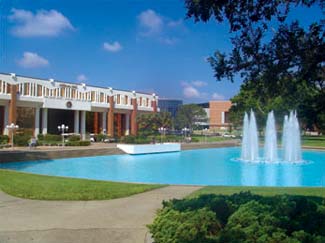
Enjoy Grand Canyon University's traditional campus experience. Nestled on over 115 acres in the heart of Phoenix, with new modern classrooms, suite style dorms and a focus on creating a rich student life, the GCU campus is a top choice for high school graduates.

Grand Canyon University

Earn Your DegreeGrand Canyon University was founded in 1949, and is a regionally accredited, private Christian university, recognized as offering some of the best online education programs in the nation by noteworthy sources including Fortune Small Business, Forbes.com, thebestschools.com and more.
Located in Phoenix, Arizona, GCU offers a variety of nursing and health care programs, including undergraduate, graduate and bridge programs. Students can elect to take courses online or through our evening classes, which meet just once a week at the Phoenix campus and other satellite locations throughout Arizona.
https://youtu.be/cWNEZLbP9Lk


Need
    Image result for it education
  • Education is a life long process therefore anytime anywhere access to it is the need
  • Information explosion is an ever increasing phenomena therefore there is need to get access to this information
  • Education should meet the needs of variety of learners and therefore IT is important in meeting this need
  • It is a requirement of the society that the individuals should posses technological literacy
  • We need to increase access and bring down the cost of education to meet the challenges of illiteracy and poverty-IT is the answer
Importance
  • access to variety of learning resources
  • immediacy to information
  • anytime learning
  • anywhere learning
  • collaborative learning
  • multimedia approach to education
  • authentic and up to date information
  • access to online libraries
  • teaching of different subjects made interesting
  • educational data storage
  • distance education
  • access to the source of information
  • multiple communication channels-e-mail,chat,forum,blogs,etc.
  • access to open courseware
  • better accesses to children with disabilities
  • reduces time on many routine tasks
Information Technology in Education

INTRODUCTION Information Technology in Education, effects of the continuing developments in information technology (IT) on education.
The pace of change brought about by new technologies has had a significant effect on the way people live, work, and play worldwide. New and emerging technologies challenge the traditional process of teaching and learning, and the way education is managed. Information technology, while an important area of study in its own right, is having a major impact across all curriculum areas. Easy worldwide communication provides instant access to a vast array of data, challenging assimilation and assessment skills. Rapid communication, plus increased access to IT in the home, at work, and in educational establishments, could mean that learning becomes a truly lifelong activity—an activity in which the pace of technological change forces constant evaluation of the learning process itself.
Significance of IT in education
  • Access to variety of learning resources
In the era of technology. IT aids plenty of resources to enhance the teaching skills and learning ability. With the help of IT now it is easy to provide audio visual education. The learning resources are being widens and widen. Now with this vivid and vast technique as part of the IT curriculum, learners are encouraged to regard computers as tools to be used in all aspects of their studies. In particular, they need to make use of the new multimedia technologies to communicate ideas, describe projects, and order information in their work.
  • Immediacy to information
IT has provided immediacy to education. Now in the year of computers and web networks the pace of imparting knowledge is very very fast and one can be educated anywhere at any time. New IT has often been introduced into well-established patterns of working and living without radically altering them. For example, the traditional office, with secretaries working at keyboards and notes being written on paper and manually exchanged, has remained remarkably stable, even if personal computers have replaced typewriters.
  • Any time learning
Now in the year of computers and web networks the pace of imparting knowledge is very very fast and one can be educated .One can study whenever he wills irrespective of whether it is day or night and irrespective of being in India or in US because of the boom in IT.
  • Collaborative learning
Now IT has made it easy to study as well as teach in groups or in clusters. With online we can be unite together to do the desired task. Efficient postal systems, the telephone (fixed and mobile), and various recording and playback systems based on computer technology all have a part to play in educational broadcasting in the new millennium. The Internet and its Web sites are now familiar to many children in developed countries and among educational elites elsewhere, but it remains of little significance to very many more, who lack the most basic means for subsistence.
  • Multimedia approach to education
Audio-Visual Education, planning, preparation, and use of devices and materials that involve sight, sound, or both, for educational purposes. Among the devices used are still and motion pictures, filmstrips, television, transparencies, audiotapes, records, teaching machines, computers, and videodiscs. The growth of audio-visual education has reflected developments in both technology and learning theory.
Studies in the psychology of learning suggest that the use of audio-visuals in education has several advantages. All learning is based on perception, the process by which the senses gain information from the environment. The higher processes of memory and concept formation cannot occur without prior perception. People can attend to only a limited amount of information at a time; their selection and perception of information is influenced by past experiences. Researchers have found that, other conditions being equal, more information is taken in if it is received simultaneously in two modalities (vision and hearing, for example) rather than in a single modality. Furthermore, learning is enhanced when material is organized and that organization is evident to the student.
These findings suggest the value of audio-visuals in the educational process. They can facilitate perception of the most important features, can be carefully organized, and can require the student to use more than one modality.
  • Authentic and up to date information
The information and data which are available on the net is purely correct and up to date.
Internet, a collection of computer networks that operate to common standards and enable the computers and the programs they run to communicate directly provides true and correct information.
  • Online library
Internets support thousands of different kinds of operational and experimental services one of which is online library. We can get plenty of data on this online library.
As part of the IT curriculum, learners are encouraged to regard computers as tools to be used in all aspects of their studies. In particular, they need to make use of the new multimedia technologies to communicate ideas, describe projects, and order information in their work. This requires them to select the medium best suited to conveying their message, to structure information in a hierarchical manner, and to link together information to produce a multidimensional document.
  • Distance learning
Distance Learning, method of learning at a distance rather than in a classroom. Late 20th-century communications technologies, in their most recent phases multimedia and interactive, open up new possibilities, both individual and institutional, for an unprecedented expansion of home-based learning, much of it part-time. The term distance learning was coined within the context of a continuing communications revolution, largely replacing a hitherto confusing mixed nomenclature—home study, independent study, external study, and, most common, though restricted in pedagogic means, correspondence study. The convergence of increased demand for access to educational facilities and innovative communications technology has been increasingly exploited in face of criticisms that distance learning is an inadequate substitute for learning alongside others in formal institutions. A powerful incentive has been reduced costs per student. At the same time, students studying at home themselves save on travel time and other costs.
Whatever the reasoning, distance learning widens access for students unable for whatever reason (course availability, geographical remoteness, family circumstances, individual disability) to study alongside others. At the same time, it appeals to students who prefer learning at home. In addition, it appeals to organizers of professional and business education, providing an incentive to rethink the most effective way of communicating vital information.
  • Better accesses to children with disabilities
Information technology has brought drastic changes in the life of disabled children. IT provides various software and technique to educate these poor peoples. Unless provided early with special training, people profoundly deaf from birth are incapable of learning to speak. Deafness from birth causes severe sensory deprivation, which can seriously affect a person's intellectual capacity or ability to learn. A child who sustains a hearing loss early in life may lack the language stimulation experienced by children who can hear. The critical period for neurological plasticity is up to age seven. Failure of acoustic sensory input during this period results in failure of formation of synaptic connections and, possibly, an irremediable situation for the child. A delay in learning language may cause a deaf child's academic progress to be slower than that of hearing children. The academic lag tends to be cumulative, so that a deaf adolescent may be four or more academic years behind his or her hearing peers. Deaf children who receive early language stimulation through sign language, however, generally achieve academically alongside their hearing peers.
The integration of information technology in teaching is a central matter in ensuring quality in the educational system. There are two equally important reasons for integrating information technology in teaching. Pupils must become familiar with the use of information technology, since all jobs in the society of the future will be dependent on it, and information technology must be used in teaching in order to improve its quality and make it more effective.

INTRODUCTION

The information society challenges the education system. In recent years, the speedy, effective and global communication of knowledge has created a new foundation for co-operation and teamwork, both nationally and internationally. The increasing role played by information technology in the development of society calls for an active reaction to the challenges of the information society.
Already, new and greater demands are being made as to the core qualifications of individuals, as well as to their understanding and knowledge of the consequences of the introduction of information technology for the work and organisation of a company. Companies are no longer forced to gather all their functions in one place. The knowledge-intensive functions such as development and marketing can be sited in countries where the labour market can supply highly educated employees, whilst production itself can be moved to low wage countries. The result is the efficient handling, processing, co-ordination and administration of company resources, which is decisive for the competitiveness of the company.In a society which is becoming increasingly dependent on information and the processing of knowledge, great demands are therefore made that the individual should have a solid and broad educational foundation on which to build. Educational policy in the information society must ensure that:
  1. IT qualifications are developed by means of their integration in all activities in the education sector and
  2. The individual citizen must have an active and critical attitude to developments and not passively allow technological development to set the pace.

IT educational policy must ensure:
  • Up-to-date qualifications in the information society
  • Up-to-date qualifications gained against the background of a high general level of education in the population will be decisive if Denmark is to maintain competitiveness and its share of the global labor market in the information society. IT skills and IT understanding are thus central prerequisites for the individual, both now and especially in the future.
The advantage of using information technology is that time-consuming work routines can increasingly be performed by means of this technology and time can thus be devoted instead to communicating and informing, to the processing of information and the production of knowledge.

Saturday, February 6, 2016

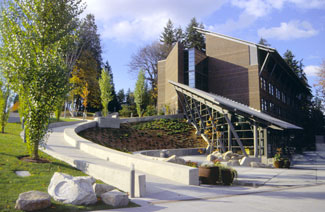
The University of Washington Bothell: Interactive Media Design and Center for Serious Play

The Interactive Media Design (IMD) Bachelor of Arts degree at the University of Washington Bothell offers students an expansive understanding of the processes involved in designing, creating and evaluating leading-edge digital applications. Students gain the theory, practice, and knowledge necessary to succeed in a competitive global and digital economy.
The IMD program focuses on the studio experience, blending academics, digital design techniques, process management, and methods for gathering and analyzing metrics. Students design and implement solutions to complex, real-world problems using the same techniques employed by technology companies. Completed projects contribute to a personal media portfolio (course requirement).
IMD Graduates are prepared for positions in high demand careers:
  • Multi-Media Artists and Animators
  • Game Designers and Producers
  • E-Book and E-Learning Creators
  • Digital Arts and Media Production
  • Social Media and Analytics
  • Interdisciplinary Project Management
  • Application Development for Emerging Technologies
The Center for Serious Play is the University of Washington Bothell’s digital media research and development studio. The Center offers students additional opportunities to contribute to university and industry research and development efforts. Teams of artists, user experience designers, writers, software developers and others create digital projects like experimental films, interactive games, data visualizations, and gestural motion tracking applications.

UNIVERSITY OF WASHINGTON BOTHELL...

One of the Center’s imperatives are to investigate how technology, creative arts and education can combine to enhance and enrich our lives. Finding ideas and inspiration from these fields, students create interactive digital experiences.
The Center launched a student-powered technology, culture, science and arts blog designed, developed and managed by students called The Next (www.uwbnext.com). It includes a student-produced film: Virtually Physical: Design in the Digital Age.
Students are not just trained for competitive careers in technology—they are uniquely prepared to be innovators of technology and the digital world.
Wherever you are, digital media is playing an increasingly bigger role in the marketplace and in global culture. With outsourcing on the rise, you can work for a prestigious international company from just about anywhere.

Digital Media Workers Are In Demand

Career skills in demand include digital video, animation, audio, web design, graphic design, video and interactive multimedia, to name a few. Digital workers can find jobs in consulting, education, the arts, the media - new and traditional, marketing communications and training.
So, if digital media is a good career choice for you, where do you start? Coming to the U.S.A. to study digital media makes perfect sense. Here you can access the latest technology, learn from award-winning instructors and get hands-on experience in the industry.

Students Learn to Excel in the Classroom

At many U.S. community colleges, students can earn associate degrees and vocational certificates in television production, broadcast journalism, television scriptwriting, graphic design, 3D animation/modeling, digital music production and digital media arts.
digital music production certificate program offers instruction in various means of computer assisted digital audio production including sequencing, digital recordingrecording studio techniquesmixdown and synchronization to video. It also covers the business of music as well as technologies for web audio design.

Real-World Experience

SANTA ANA COLLEGE...

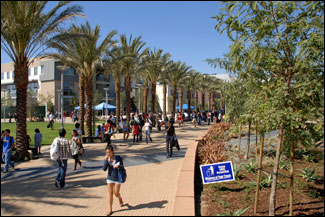
At Santa Ana College (SAC) near Los Angeles, students can earn associate degrees and vocational certificates inTelevision Production, Broadcast Journalism, Television Scriptwriting, Graphic Design, 3D Animation/Modeling, Digital Music Production and Digital Media Arts. Two new certificate programs are offered in Digital Media Freelance andDigital Media Post-production.
The College’s Media Center (DMC) houses a “business incubator” for emerging digital media businesses, classrooms with remote desktop connection software, and a production facility.
Courses in SAC’s associate degree program in Digital Media Arts include typography, digital publishing and graphic arts for the web.
Completion of the associate degree prepares students to move into a four-year institution or into a professional art school. The associate degree also provides for entry into jobs in a variety of areas: advertising agency, printing business, design studio, web production, freelance designer or related fields.

HERE ARE SOME SCHOOLS WITH GREAT TECHNOLOGY PROGRAMS:

SANTA MONICA COLLEGE...

Santa Monica College is also known for preparing students to work in the entertainment industry. At the College’s Academy of Entertainment & Technology, students in a 3D Character Animation class work with Autodesk Maya to master the fundamentals of 3D character animation—including techniques, such as posing, timing, weight, anticipation, squash and stretch, overlapping action, and staging. The class also introduces them to the basics of performance animation.

PIERCE COLLEGE...

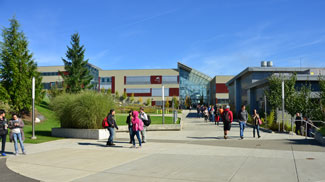
At Pierce College in Lakewood, Washington, the Digital Design Program offers concentrations in two main areas:
Traditional Graphic Design: computer and traditional illustration, digital photography and image manipulation, print-based page layout, and web design.
Dynamic Media Production: 3D modeling, 2D and 3D animation, video production, DVD authoring, and rich media authoring.
Core classes include Introduction to Graphic Design and Rich Media, Production Management, Layout Design and Publishing, Fundamentals of 3-D Modeling and Animation, Web Design and CSS, Fundamentals of Digital Photography, Fundamentals of Video Production and DVD Authoring, Fundamentals of Multimedia Authoring Systems, Integrated Digital Design. One of the core requirements is also a supervised internship with a local business and guidance in preparing a resume and job interview skills.

UNIVERSITY OF CENTRAL FLORIDA (UCF)...

University of Central Florida (UCF), in Orlando, offers three undergraduate specializations in Digital Media: Game Design, Web design or Visual Language.
Students specializing in Game Design learn about the history, culture and design of video games. The program is structured so that students are exposed to the major areas of game design and development—art, programming and producing.
The Web Design specialization allows students to explore the fundamentals of web design with classes in media software design and internet interaction. Media business practices and information management is also covered.
The Visual Language Specialization blends art, storytelling, and technology with classes in areas of character animation and visual storytelling.
UCF also offers two master’s degree programs in digital media. Graduate students in the Master of Arts in Visual Language and Interactive Media study new media theory. A Master of Fine Arts in Visual Language and Interactive Media track is a specialized program in the conceptual, theoretical design, and technical skills which are needed for storytelling.

THE COLLEGE OF SAN MATEO ...

With the convergence of new and old media, more employers are demanding that applicants have a working knowledge of a variety of mediums. The College of San Mateo, near San Francisco, recognized the demand and consolidated theirBroadcast and Electric Media, Journalism, Graphic Design and Web Design programs into one department: Digital Media.
Students are provided interdisciplinary knowledge and a diverse set of skills, preparing them for employment and transfer to university. Students are trained in various production programs, such as Final Cut Pro, Adobe programs, Pro Tools, and Dreamweaver. The department partners with local TV station KCSM, giving students access to professionals and real world experience. In addition, the school’s proximity to the Silicon Valley and San Francisco provides graduating and transferring students with a wealth of opportunity for employment
When the electrical engineers of the late ’70s and early ’80s introduced the world’s first mobile phones, they never would have imagined the world we live in today. Mobile phones now have features like mobile payment systems and video conferencing, all running on a multi-core processor in your pocket.
Today’s economy has become an intertwined, international marketplace where ideas are the driving force rather than basic goods. Technological advancements continue to change the way people live their lives all over the world and employers are looking to capitalize on this. Individuals who possess a combination of technical training and a certain level of creativity are in high-demand.
According to the U.S. Department of Labor, employment growth will be driven by the increasing reliance on information technology and the continuing importance of maintaining system and network security. In order to fill high-tech positions, employers are seeking well-educated and qualified individuals who understand the latest developments in technology.
Today’s students will decide how technology will shape our future.

Technology Education in the U.S.A.

U.S. universities and colleges offer a greater variety of programs with a specialized focus in areas such as security, user interface design and geospatial technology. Program coursework incorporates both theoretical and hands-on practical training.
A new trend in technology education is a heightened focus on “soft skills.” Soft skills are the interpersonal skills required to be effective in a professional setting. These include oral and written communication skills, project management, and teamwork. These skills will make you a more dynamic employee and increase your chances of success.

What to Look for in a Program

It is important that a program’s curriculum reflect the latest in technology. Therefore, the university or college must strive to update its curriculum so that it is relevant. There’s nothing worse than spending a year focused on a specific platform, only to read a news article announcing that platform’s pending demise.
The school should also provide the equipment needed to study your area of interest. For example, it wouldn’t make sense to study network engineering at a school that did not provide the equipment needed for practical training.
Students in certain specialized degree programs may also have access to high-end industrial tools and equipment. There’s nothing more exciting than getting a chance to work with a piece of equipment that you’ve read about and otherwise couldn’t afford. In addition to modern equipment, network connection speeds are equally important. Fast connectivity is now a high priority because distributed computing has become more common. Many American colleges and universities even offer gigabit Internet connections. This gives students the ability to develop new and creative uses for networked communications, without being encumbered by a limited Internet connection.
Seek schools that employ faculty with industry experience. It is also important that the program seeks the advice of technology professionals when shaping future curriculum. A school that regularly reaches out and works with the surrounding community will be the first to know about emerging technologies.

Degrees and Certificates

You can qualify for many careers in technology with a Certificate or Associate of Applied Science degree. These degrees can be earned at technical or community colleges, private specialized training schools, and for-profit training companies. In addition, you could continue with a bachelor’s or master’s degree if you are interested in a management, research or security position in technology.

Technology Fields of Study

Electrical Engineering:Combines the best of engineering and technology in areas such as robotics, simulation, and real-time systems.
Computer Science: Incorporates advanced work with software, programming languages, graphics, operating systems, and user interfaces.
Information Technology (IT):Installing and configuring software and hardware, data management, networking, engineering computer hardware, database and software design, and the management and administration of entire systems.
Software Development: Writing business application programs to instruct a computer to perform a variety of tasks. It involves analysis of the expected output, information flow, and writing and testing of the code.
Web Development: Developing server-based applications using standard web protocols. It typically involves a combination of IT and software developer skills, alongside an ability to design a functional user interface.

COLLEGE OF CHARLESTON...

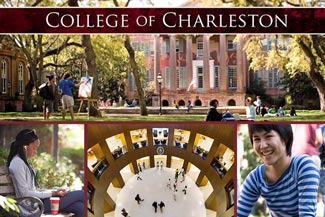
Located in Charleston, South Carolina’s emerging tech node known as “Silicon Harbor,” the College of Charleston’scomputer science program is well positioned to offer students an immersive learning experience. Students partner with faculty on research projects and gain hands-on experience through internships with local tech companies.
The Department of Computer Science has seen the largest growth in its computing in the arts (CITA) and data science programs. CITA combines creativity and computing in the same degree program. Employers in the entertainment and defense industries, among others, are looking for computer scientists who can both think creatively and codify their thoughts.
“What I’m most excited about seeing is computational thinking being recognized as a vital component of the liberal arts,” said Chris Starr, chair of the computer science department. “The possibilities are endless when a student is immersed in a highly technical degree program in the center of a liberal arts and sciences education.”
The department assists its graduates in starting their careers, and many computer science alumni are thriving in tech jobs in Charleston and around the country. Among the companies who have hired alumni are Facebook, Google, Pandora, Digital Domain, Yahoo Research, Amazon, Microsoft, Blackbaud, Benefitfocus and many other major technology companies.
By producing the software developers, designers and other creative problem solvers companies desire and by establishing private and corporate partnerships to expand its academic offerings, the department has developed a talent pipeline that contributes to the economic development of Charleston and South Carolina, said Starr.

SANTA MONICA COLLEGE...

Introduction to Mobile Robots students at Santa Monica College in California learn how to use hardware—including computers and other controllers, motors, artificial muscles, arms, grippers, ultrasonic sensors, whiskers, and cameras—and software to program and operate mobile robots. The robots can recognize objects and speech, talk back, and interact with changing environments.
Nowadays the life sciences also require considerable knowledge of new technology. Through data analyses and laboratory reports, Genetics and Molecular Biology students examine the structure, function, and transmission of genes. The course utilizes Internet databases for bioinformatics to show relationships between DNA and protein sequences.
In another course, Fundamentals of Microbiology, Santa Monica students explore clinical applications of microbiology including recent molecular biological and serological techniques. Their laboratory experience includes aseptic transfer techniques, methods of microscopy, and analytical techniques for identifying microbial organisms.


GEORGE MASON UNIVERSITY...


Based on the college’s Loudoun campus at its Reston Center, the GST program leads to a one-year certificate or a two-year Associate’s in Science degree in preparation for transfer to George Mason University, or other four-year university programs. English fluency is required. Advanced Forensic Investigation, Communication Design, and Biotechnology are other programs at the college using increasingly sophisticated technology and attracting an increasing number of international students.
Subscribe to RSS Feed Follow me on Twitter!